The Greatest Race on Earth: The Untold Story of the Tour de France
How a desperate newspaper editor accidentally created the world's most brutal sporting spectacle
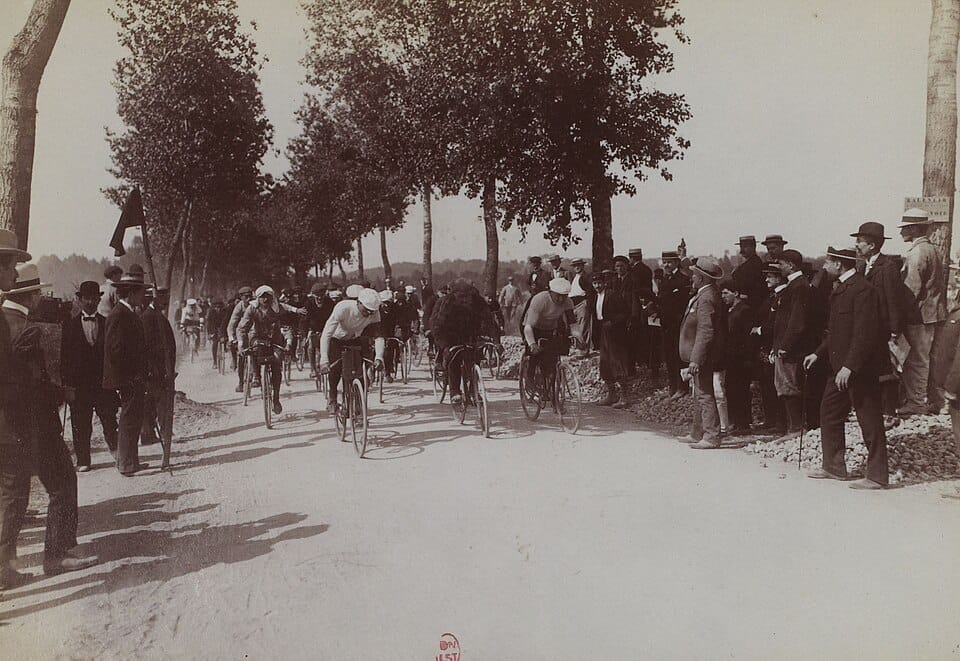
Imagine this: it's July 1, 1903. Sixty men gather outside a café on the outskirts of Paris — mostly French, a handful of Belgians, Swiss, Germans and Italians. Some are paid professionals. Others are just men who love to ride. All of them have agreed to race across an entire nation on nothing but two wheels, muscle, and whatever they packed in their jersey pockets.
At 3:16 in the afternoon, they push off into the unknown.
Nobody knew it at the time, but they were starting something that would outlast empires, survive two world wars, and eventually become one of the most-watched sporting events on the planet.
This is the story of the Tour de France.
It Started as a Publicity Stunt
Let's be honest: the Tour de France was not born from athletic idealism. It was born from desperation.
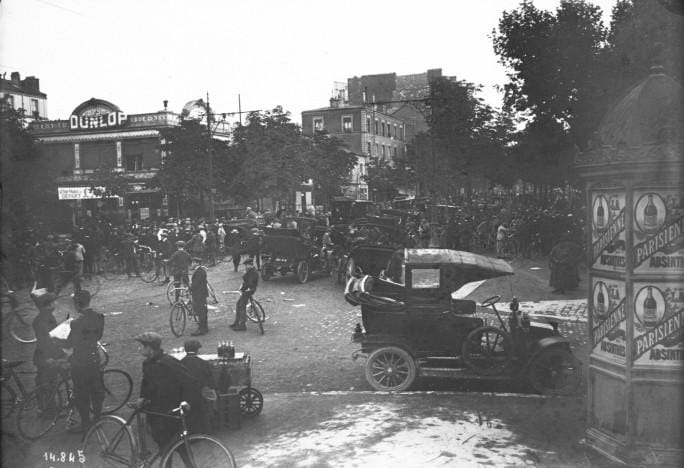
Henri Desgrange, the editor of a struggling French sports newspaper called L'Auto, was losing a circulation war to his rival publication, Le Vélo. He needed something big. Something that would make people talk, argue, and — most importantly — buy papers.
His reporter, Géo Lefèvre, had a wild idea: what if they organised a race so enormous, so audacious, that it would swallow the whole of France? A multi-stage bicycle race around the entire country.
Desgrange loved it. In January 1903, L'Auto announced the race. And when those 60 riders rolled out from the Café au Réveil Matin in Montgeron that July afternoon, L'Auto's print run was a modest 20,000 copies. By the time Maurice Garin crossed the finish line in Paris to claim victory and 20,000 francs in prize money, the paper was selling 65,000 copies a day.
The stunt had worked. Spectacularly.
What Exactly Is the Tour de France?
At its heart, the Tour is a stage race — meaning it's not one continuous ride, but a series of daily races (called stages) strung together over three weeks. Each day's stage has a winner, but what matters most is your total accumulated time across all stages. The rider with the lowest total time at the end wins the whole thing.
The race currently runs 21 stages over 23 days (with two scheduled rest days), covering roughly 3,300 to 3,600 kilometres through the French countryside, mountains, and cities. It's held every July.
Think of it like this: riders essentially run a marathon every single day for three weeks, except it's on a bike, uphill, in the summer heat, at speeds that would terrify most car drivers.
The route changes every year — but the drama never does.
The Numbers That Will Make Your Jaw Drop
- 112 editions have been held (through 2025), as the race has been running since 1903 — interrupted only by the two World Wars
- 21 stages make up a modern Tour
- ~3,400 km — the typical race distance each year
- 184 riders typically start the race across 23 teams of 8 riders each
- ~50,000 metres of total elevation gain — the equivalent of climbing Mount Everest nearly six times
- 3.5 billion viewers follow the race across all platforms globally
- The Tour is broadcast in over 190 countries
- Roughly 12 million spectators line the roadsides across the three weeks — making it one of the biggest free sporting spectacles on Earth
The Mountain That Changed Everything
The original 1903 Tour had six stages, mostly flat, on dirt roads through the night. Riders navigated unpaved tracks without team support, without radios, and — remarkably — without helmets. Just 21 of the original 60 finishers completed the race.
Then, in 1910, organisers added the Pyrenees.
Riders were terrified. One famous story goes that Octave Lapize, struggling up the brutal Col du Tourmalet, shook his fist at the officials watching from above and screamed, "You are assassins! Yes, assassins!"
The crowds went wild.
The Alps followed in 1911, and the Tour was transformed. No longer was it simply a test of speed — it became a battle against geography itself. The mountains gave the race its soul: the climbers, the break-aways, the riders who seem to float uphill while others crack and crumble.
Those Alpine and Pyrenean climbs remain the spiritual heart of the Tour to this day.
The Four Jerseys — More Than Just Colours
One of the most distinctive features of the Tour is the coloured jersey system. Each jersey represents a different kind of excellence.
🟡 The Yellow Jersey (Maillot Jaune)
The most iconic jersey in sport. Worn by the overall race leader — the rider with the lowest total time. It was introduced in 1919, reportedly either as a nod to the yellow newsprint of L'Auto or simply because yellow was the only colour fabric available on short notice. Either way, it stuck.
Wearing the maillot jaune into Paris is the ultimate achievement in cycling. The whole race is built around chasing or protecting it.
🟢 The Green Jersey (Maillot Vert)
Awarded to the points leader — typically a fast sprinter who wins or places highly on flat stages. While the yellow jersey goes to the best all-rounder, green belongs to the fastest finisher. Slovak rider Peter Sagan won it a record seven consecutive times between 2012 and 2019.
🔴 The Polka Dot Jersey (Maillot à Pois)
The mountain climber's prize — awarded to the King of the Mountains. Points are given at the summit of classified climbs, and whoever accumulates the most earns this distinctive white-and-red spotted jersey. It's been around since 1933, though the polka dot design only arrived in 1975 (courtesy of a chocolate sponsor who wanted something eye-catching).
⬜ The White Jersey (Maillot Blanc)
For the best young rider under 26 years of age. It's essentially the yellow jersey for the next generation — a preview of future champions. Tadej Pogačar won the white jersey four times.
Surviving Two World Wars
The Tour has been cancelled only twice in its history — both times because of global conflict.
There were no editions from 1915 to 1918 during the First World War. When the race returned in 1919, it brought something new with it: the yellow jersey. A symbol of hope and renewal in a shattered country.
The race was suspended again from 1940 to 1946 during the Second World War. Occupied France was no place for a cycling carnival. But when the Tour came back in 1947, it was embraced with an almost religious fervour — proof that life, sport, and joy could continue.
That resilience is part of what makes the Tour more than a race. It's a living piece of French cultural identity.
The Legends Who Defined the Race
Over 112 editions, a handful of riders have burned themselves into cycling folklore.
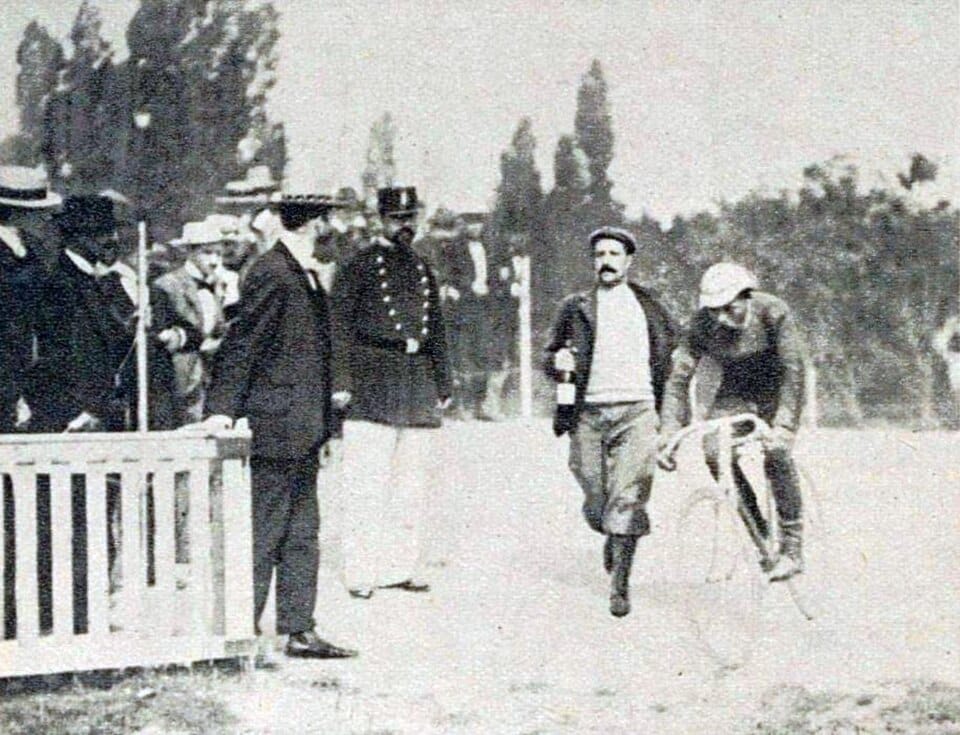
Maurice Garin won the very first Tour in 1903 — a chimney sweep who rode through the night on a 30-pound steel bicycle. He was celebrated by massive crowds in Paris. The next year, he was disqualified from the 1904 Tour amid chaos that included spectators building human blockades, throwing tacks on the road, and — yes — some riders taking shortcuts by car.
Eddy Merckx — "The Cannibal" — is the closest thing cycling has to a deity. The Belgian won the Tour five times between 1969 and 1974, and in 1969 he swept the yellow, green and polka dot jerseys in a single edition. He didn't just want to win — he wanted to win everything, every day. He holds 34 stage victories, second only to Mark Cavendish.
Bernard Hinault, the last Frenchman to win the Tour, claimed five titles between 1978 and 1985. He once punched a protester who blocked the road mid-stage. Nobody blocked him twice.
Miguel Indurain achieved something no one had done before or since: five consecutive victories from 1991 to 1995. Tall, quiet, and powered by a VO2 max (oxygen-processing capacity) that scientists could barely measure, the Spaniard simply time-trialled his way to dominance while his rivals burned out on the climbs.
Lance Armstrong told one of cycling's most complicated stories. Seven consecutive wins from 1999 to 2005 — then stripped of every title in 2012 after revelations of systematic doping. Those years are now officially listed as having no winner in the record books.
Tadej Pogačar, the current monarch of the peloton, is only 26 and already holds four Tour victories (2020, 2021, 2024, 2025). The Slovenian rides with a smile on his face and an aggression that draws direct comparisons to Merckx. He might just be getting started.
The Route: A Moving Canvas
One of the Tour's great traditions is that the route is never the same twice. Each year, race director Christian Prudhomme and his team craft a new course — balancing flat sprint stages, punishing mountain stages, and precision individual time trials.
The only constant? The race traditionally finishes on the Champs-Élysées in Paris (with the rare exception, like 2024, when the Paris Olympics required the finish to move to Nice). That final stage into the French capital is cycling's grandest theatre — the leader in yellow, the city electric with celebration.
The race has even started outside France: in England, Germany, Belgium, the Netherlands, Spain, Monaco, and Ireland. But it always comes home.
Why People Watch — and Why They Care
Twelve million people don't line country roads in the July heat just to see some cyclists pass by in 30 seconds. They come because the Tour is theatre.
There's the domestique — the teammate who sacrifices their own race to carry bottles, block wind, and give up their bike if the team leader gets a puncture. There's the peloton — a fluid, breathing organism of 180+ riders that moves as one and fractures at the foot of every mountain. There's the breakaway — that small group of riders who attack early, knowing they'll probably be caught, but going anyway on the wild chance they won't be.
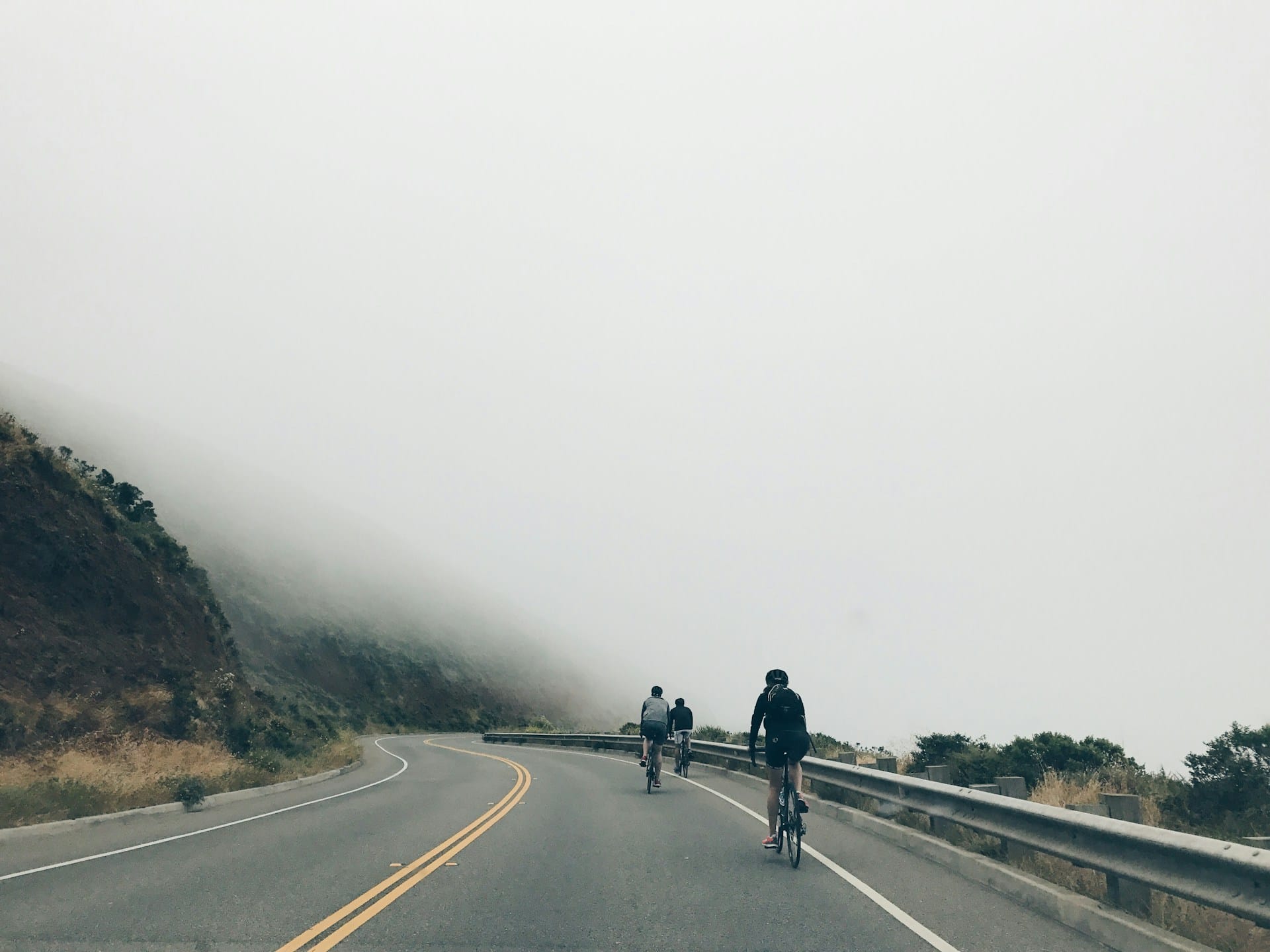
And then there are the mountains. That's where the race is won and lost and where legends are made. When a contender cracks on a climb and falls back through the peloton — face twisted, legs failing — it's genuinely painful to watch. And when a climber suddenly accelerates and dances away from their rivals on a 10% gradient at altitude, it looks like something that shouldn't be physically possible.
That's the Tour de France. Equal parts beautiful and brutal.
A Race That Refuses to Die
Over 120 years, the Tour has outlasted empires, survived wars, weathered doping scandals that rocked the sport to its core, and still comes back every July, bigger and more watched than before.
It started as a newspaper stunt on dirt roads with 60 riders who thought they were crazy. It became the third most-watched sporting event on the planet, behind only the FIFA World Cup and the Olympics.
Henri Desgrange just wanted to sell some papers. Instead, he gave the world something that would last forever.
Chain Rush is your home for cycling stories, gear, and road culture. Follow us at blog.chainrush.in 1win métodos de pago