My Journey to Becoming a Super Randonneur
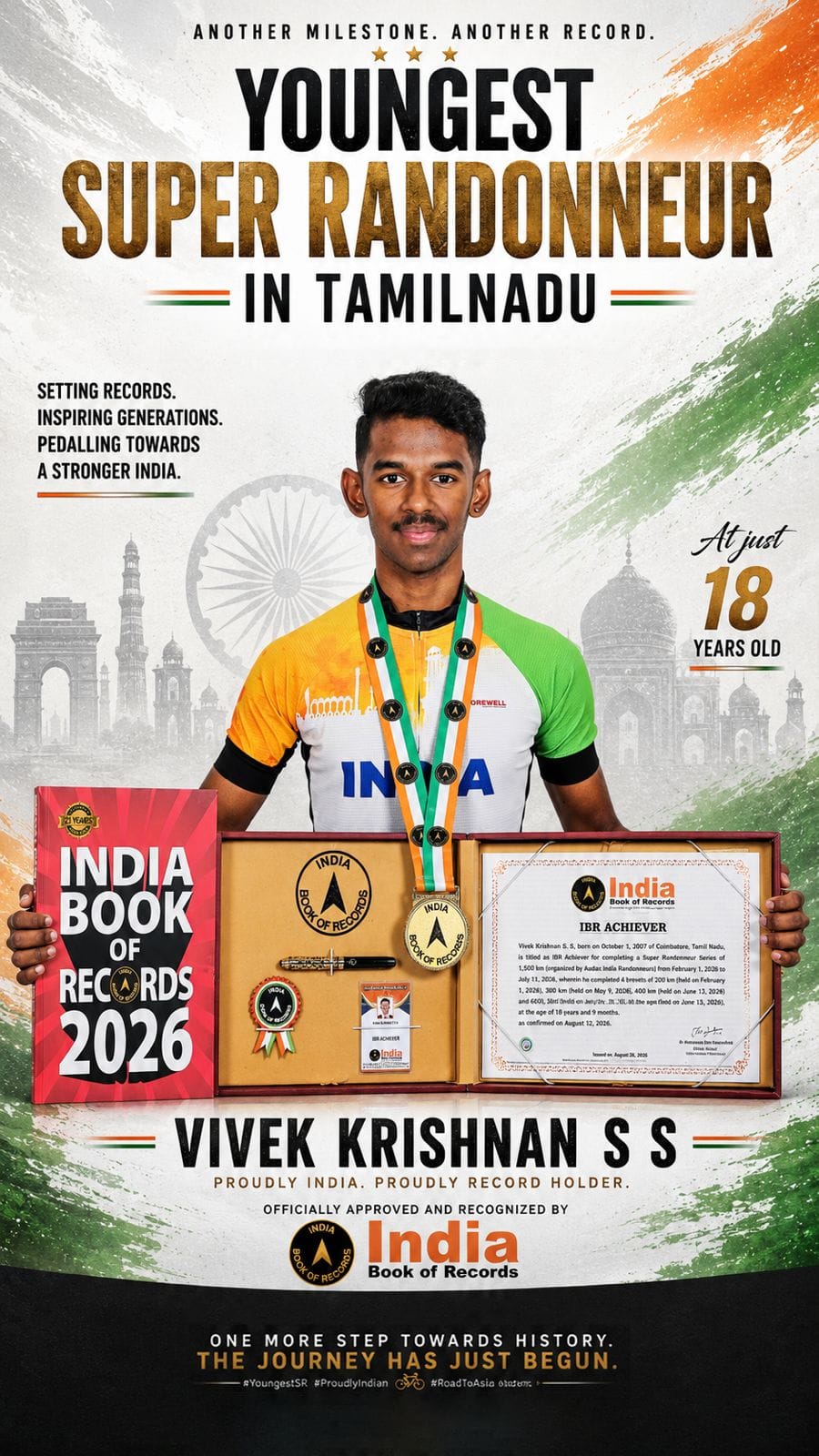
From my first 200 km brevet to becoming the youngest Super Randonneur in Tamil Nadu — a journey of endurance, determination, and self-belief.
Cycling has transformed my life in ways I never imagined.
What began as a personal challenge gradually became a journey of self-discovery, resilience, and determination. In 2026, I completed the series of long-distance brevets required to earn the internationally recognized Super Randonneur (SR) title, awarded under the rules of Audax Club Parisien (ACP), France.
Even more special was discovering that I had achieved the milestone as the youngest Super Randonneur in Tamil Nadu.
For me, however, this journey was never about age or records. It was about challenging myself, pushing beyond my comfort zone, and proving that something that initially looks impossible can be achieved with preparation and persistence.
Where It All Started
The person who first introduced me to the world of endurance cycling was Yeshwanth Yuvaraj.
He was the one who got me into cycling and introduced me to BRMs — Brevets de Randonneurs Mondiaux, internationally recognized long-distance endurance rides conducted under Audax Club Parisien rules.
Unlike conventional races, BRMs are not about being the fastest rider. The objective is to complete the prescribed distance within the official time limit, relying on your own preparation, pacing, nutrition, navigation, and mental strength.
That philosophy immediately appealed to me.
My personality has always pushed me towards difficult challenges. Whenever I see something that looks tough, my instinct is to take it up as a personal challenge and find a way to complete it.
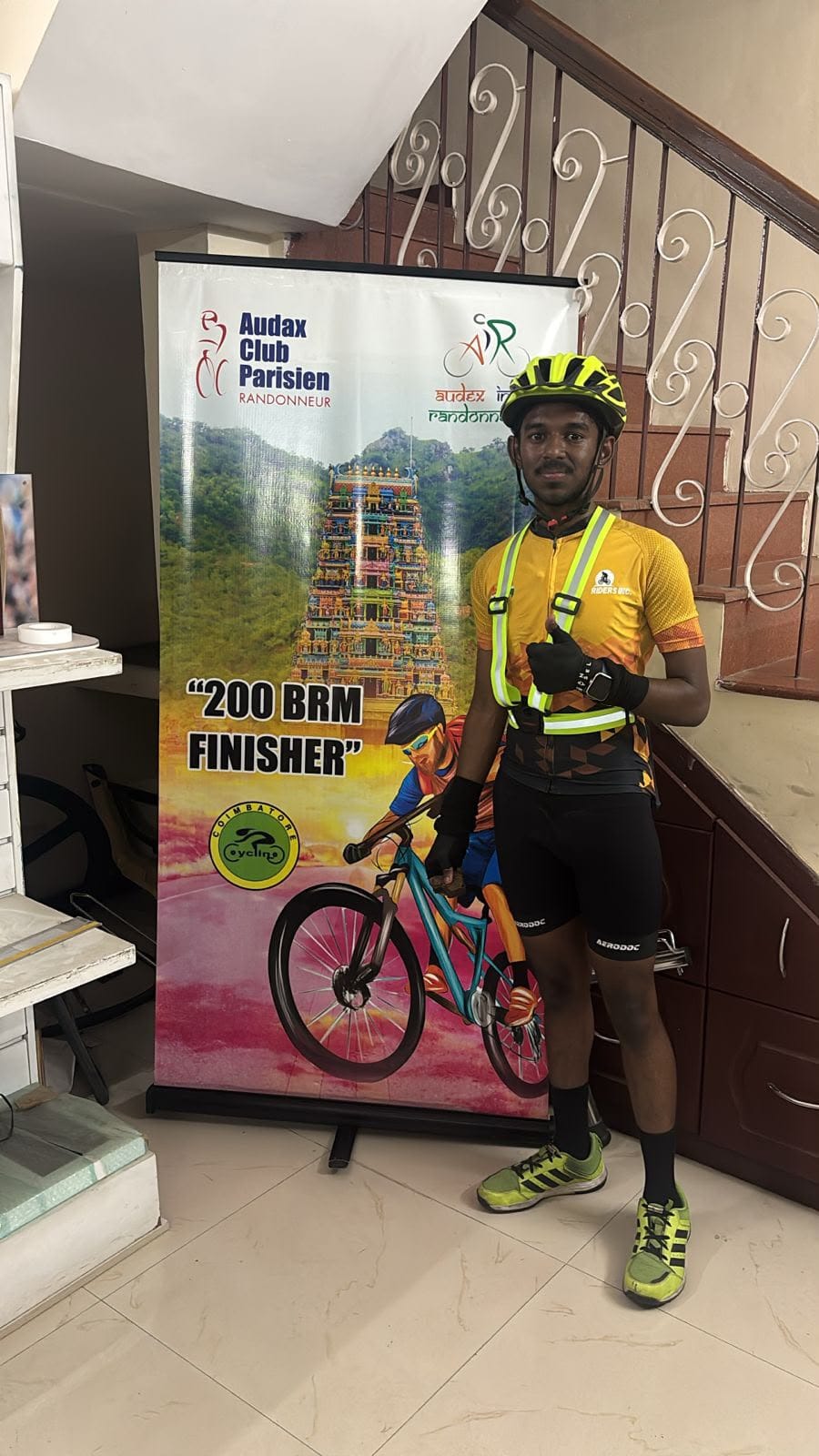
So when I learned about BRMs, I knew I wanted to experience them. That first 200 km ride became the starting point of everything that followed.
Preparing for the Super Randonneur Challenge
Completing a Super Randonneur series requires much more than simply riding long distances.
Every ride became part of my preparation.
I gradually increased my weekly mileage and learned how my body responded to fatigue. I experimented with pacing, nutrition, hydration, rest, and recovery. Most importantly, I learned that endurance cycling is not about how fast you can ride for a short period.
It is about how consistently you can keep moving for a very long time.
The longer the distance, the more important it becomes to make smart decisions.
Should I push harder here?
Should I eat now?
Do I need a longer break?
Can I maintain this pace for another 100 kilometres?
These decisions become just as important as physical fitness.
Mental preparation was equally important. Riding hundreds of kilometres requires patience and concentration. There are moments when your body feels tired and your mind starts questioning whether you should continue.
Instead of thinking about the entire distance, I learned to focus on the next checkpoint, the next kilometre, or simply the next stretch of road.
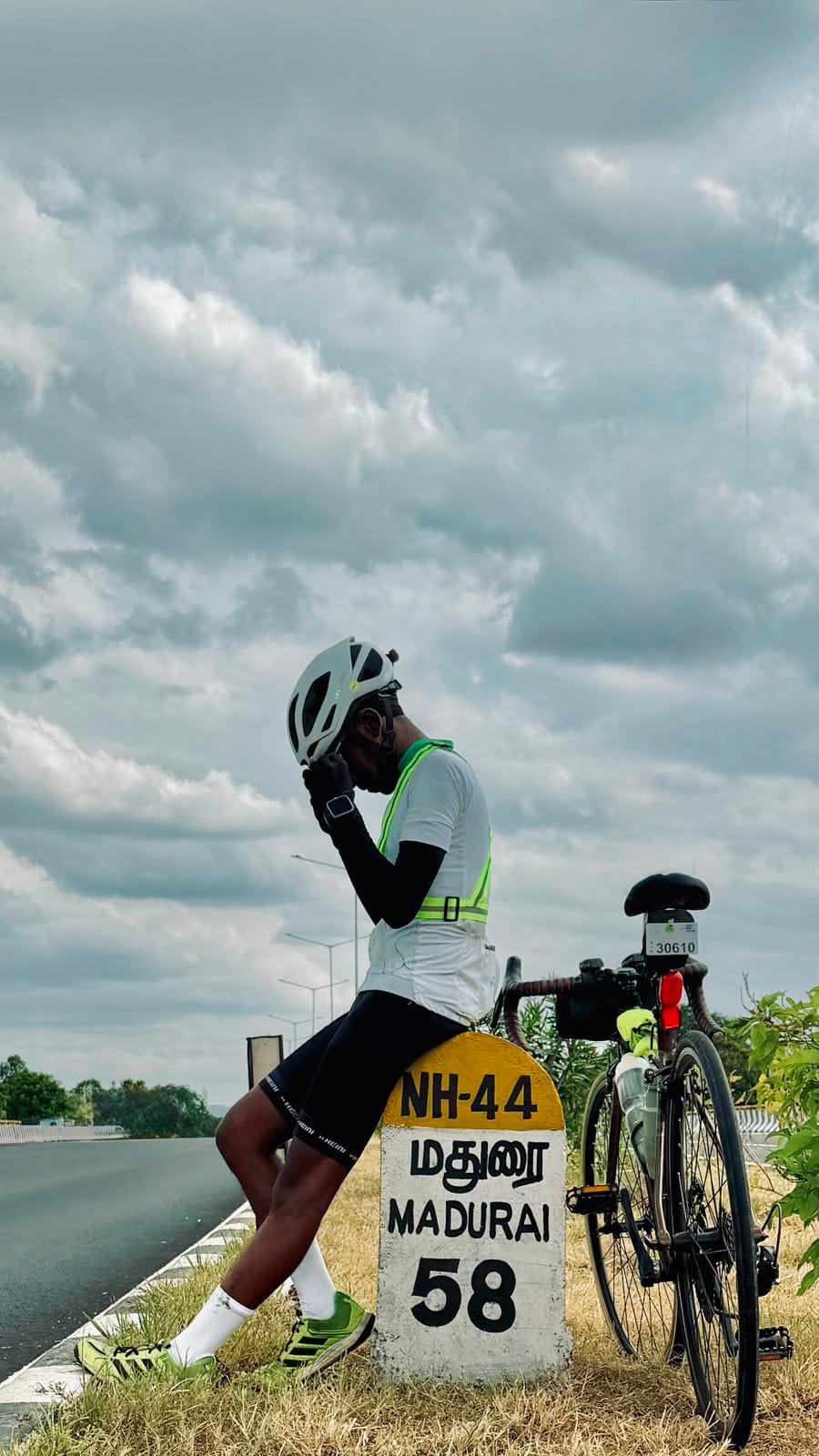
The BRMs — Every Distance, A Different Lesson
Each brevet brought its own challenges.
The longer the distance, the more demanding the experience became.
Long hours on the saddle, muscle fatigue, changing weather, sleep deprivation, night riding, and strict time limits all tested my endurance.
But every brevet also taught me something new.
The 200 km ride introduced me to the world of randonneuring.
The 300 km brevet pushed me to spend even more time on the bike and understand the importance of pacing and nutrition.
The 400 km brevet was another major step. By this point, I was beginning to understand what my body and mind were capable of.
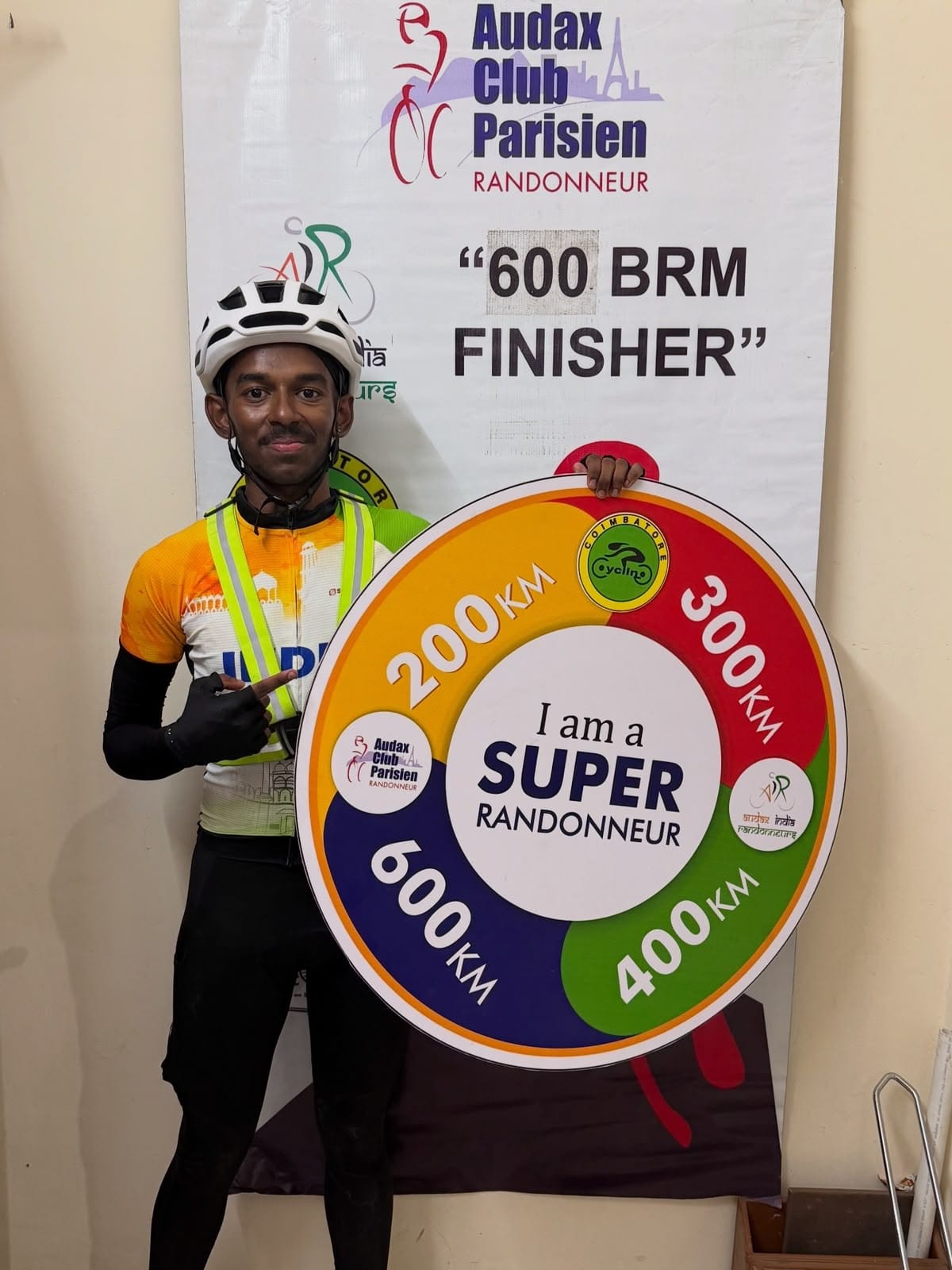
And then came the 600 km brevet — a completely different level of endurance.
The Toughest Part Wasn't Always the Distance
Long hours, muscle fatigue, changing weather, overnight riding, and the pressure of time limits all tested me.
But the toughest challenge was often mental.
At some point, every long-distance cyclist hears that voice saying, “That’s enough.”
I learned to handle those moments calmly—slow down, eat, hydrate, take a short break, talk to someone, and keep moving.
Sometimes, progress simply means putting one pedal in front of the other.
The Youngest Super Randonneur in Tamil Nadu
Interestingly, until I completed my 400 km BRM, I didn't even know that I was the youngest rider in Tamil Nadu pursuing this achievement.
My focus was never on becoming a record holder.
I wasn't thinking about my age.
I wasn't trying to prove that I was younger than someone else.
I simply wanted to complete each brevet and earn my Super Randonneur title.
When I eventually discovered that I had achieved the milestone as the youngest Super Randonneur in Tamil Nadu, it made the achievement even more meaningful.
It was an unexpected recognition that came as a result of simply pursuing a challenge I had set for myself.
Riding Through the Night
One of the most memorable parts of long-distance randonneuring is riding through the night.
With quiet roads, less traffic, and only your bike, lights, and the road ahead, the experience feels completely different.
But the night also brings fatigue, reduced concentration, and the constant temptation to sleep.
This is where fellow riders made a real difference. We often stayed together, talking, encouraging one another, and making those long, dark hours feel much shorter.
That’s one of the things I love about randonneuring.
The challenge may be personal, but you never truly have to ride alone.
Managing Fatigue, Weather and Time
One of the biggest lessons I learned was that you cannot control everything on a long-distance ride—the weather, unexpected delays, or how your body will feel after hundreds of kilometres.
What you can control is how you respond. I focused on maintaining a steady pace, staying hydrated, eating regularly, and taking planned breaks.
Instead of thinking about the total distance, I focused on the next checkpoint—one checkpoint, one kilometre at a time.That made the enormous distance feel manageable.
The Moment I Became a Super Randonneur
The final brevet was special.
By then, I had experienced the fatigue, doubts, sleepless nights, difficult climbs, and countless challenging kilometres that come with endurance cycling.
But there was still one thing left—finish the final qualifying brevet.
When I crossed the finish line, everything suddenly felt worth it.
Every early-morning training ride.
Every painful climb.
Every sleepless night.
Every difficult kilometre.
I had done it.
I had officially become a Super Randonneur.
What the Super Randonneur Title Means to Me
For me, becoming a Super Randonneur means more than completing four long-distance rides. It represents discipline, resilience, patience, consistency, and self-belief.
The journey taught me that our limits are often much further away than we imagine. When something feels impossible, we don't always need to become stronger overnight—we simply need to prepare, keep moving, and refuse to give up.
The SR journey has also changed how I approach challenges beyond cycling. Even the biggest goals become achievable when we break them down, one step at a time.
Gratitude
I am deeply grateful to everyone who supported me throughout this journey.
To Yeshwanth Yuvaraj, who introduced me to cycling and randonneuring and accompanied me on my very first 200 km BRM — thank you for opening the door to this incredible world.
To my family and friends, thank you for being there during the difficult moments and giving me the motivation to keep going.
To my fellow randonneurs, thank you for the conversations, encouragement, companionship, and countless shared kilometres.
I am also grateful to Coimbatore Cycling, Audax India Randonneurs, and Audax Club Parisien for being part of the randonneuring journey
This Is Only the Beginning
Becoming a Super Randonneur is not the end of my cycling journey—it is the beginning of many more adventures.
If there is one thing I hope people take away from my journey, it is this:
Age is not a barrier to achieving extraordinary goals.
Start where you are. Take the first step—or, in my case, the first pedal stroke.
From my first 200 km brevet to becoming the youngest Super Randonneur in Tamil Nadu, I’ve learned that endurance is built not only in the legs, but also in the mind.
Sometimes, the biggest achievement isn’t crossing the finish line.
It is becoming the person who refuses to stop before reaching it.