Why a Helmet Should Do More Than Just Protect Your Head
Why I Built a Smart Cycling Helmet (And Why Regular Helmets Aren’t Enough)
Cycling has always made sense to me. It’s affordable, environmentally friendly, and good for both physical and mental health. Over the years, I’ve seen more people turn to cycling for daily commutes, fitness, and recreation. But one uncomfortable truth never goes away—cycling safety hasn’t evolved at the same pace as cycling itself.
We wear helmets, but most of them are stuck in the past.
Traditional helmets do one thing well: they protect your head during impact. And that’s important—but it’s also where their usefulness ends. If a rider crashes and is unconscious, injured, or unable to move, the helmet becomes irrelevant. No help is called. No location is shared. Everything depends on whether someone nearby notices the accident in time.
That gap bothered me enough to try and fix it.
The Real Problem Isn’t the Crash — It’s What Happens After
In many cycling accidents, the injury alone isn’t what makes things severe. Delayed medical response is often the bigger risk. This is especially true on highways, early-morning rides, rural roads, or solo rides where there’s no immediate help.
I kept asking myself a simple question:
If our phones, watches, and cars can detect emergencies, why is a helmet still completely passive?
That question led to the idea of a smart cycling helmet—not one overloaded with gimmicks, but one focused on real-world safety.
How the Smart Helmet Thinks for the Rider
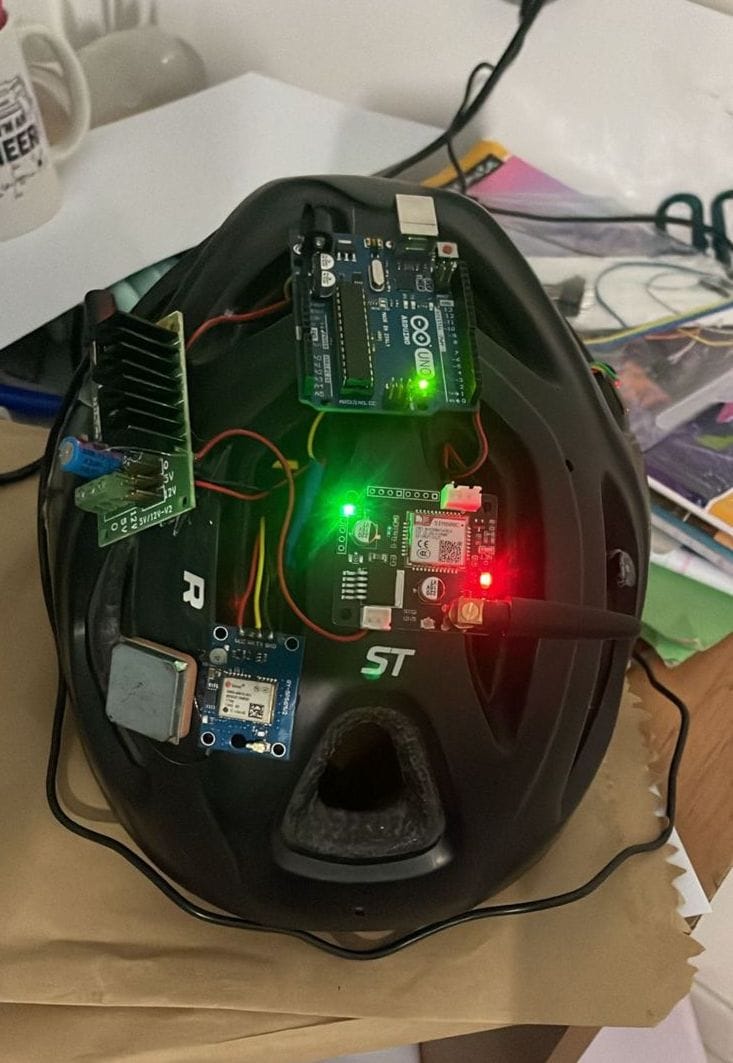
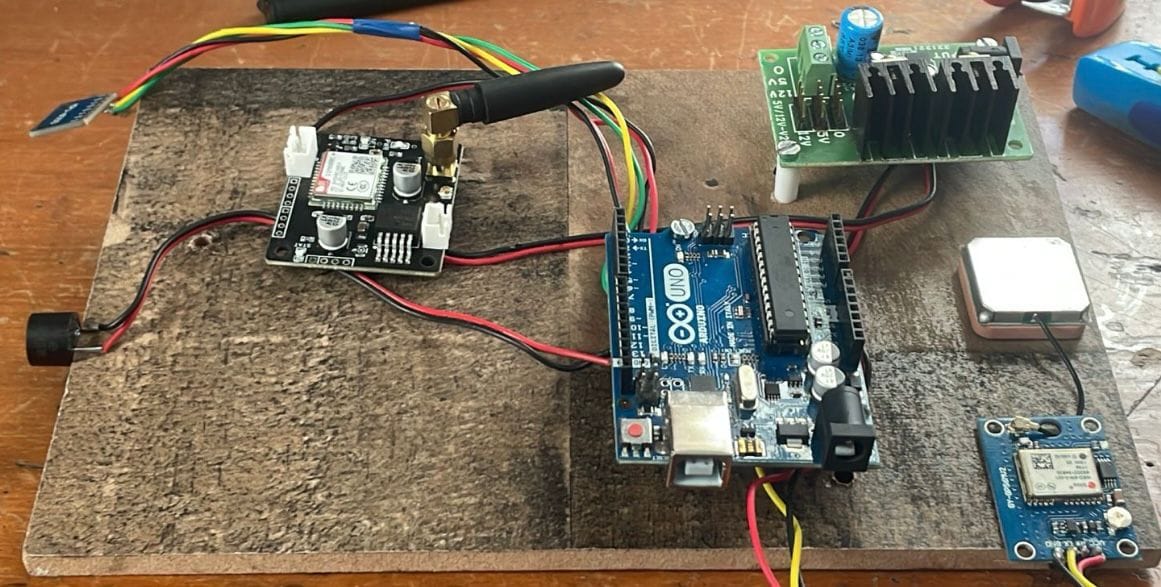
The helmet continuously monitors the rider’s movement using an internal motion sensor that tracks acceleration and orientation. Under normal riding conditions, nothing happens. But when there’s a sudden impact, an abrupt fall, or an abnormal movement pattern that clearly doesn’t belong to regular cycling, the system reacts instantly.
There’s no need for the rider to press anything or confirm an alert. The assumption is simple: if something violent and unnatural just happened, help should be notified immediately.
Location Matters More Than You Think
Detecting an accident is only half the solution. Knowing where it happened is just as critical.
As soon as an accident is detected, the helmet captures the rider’s live GPS location. This isn’t an approximate area—it’s precise coordinates that can guide someone directly to the spot. Whether the rider is in the middle of a city or on an isolated stretch of road, location data removes guesswork and saves time.
Automatic Emergency Alerts — Even If You Can’t Call
Once the location is locked, the helmet sends an emergency message using a cellular communication module. The alert includes a predefined message along with the rider’s exact coordinates and is sent to selected emergency contacts—family members, friends, or responders.
The key idea here is reliability. Even if the rider is unconscious or unable to move, the alert still goes out. The helmet doesn’t wait for permission when seconds matter.
Visibility Is Also Safety
Accidents don’t only happen because of falls. Many occur when vehicles behind a cyclist fail to notice sudden slowing.
To address this, the helmet includes a smart rear brake light. When the system detects rapid deceleration, the LED light activates automatically, warning vehicles behind the rider. This is especially useful during night rides, early mornings, or poor visibility conditions.
It’s a small feature, but one that aligns with how drivers already understand road signals.
Because Not Every Emergency Is a Crash
Sensors are powerful, but they can’t predict everything. That’s why the helmet also includes a manual SOS button.
If a rider feels unsafe, unwell, threatened, or needs help without having crashed, they can manually trigger the emergency alert. One press sends the same location-enabled message to emergency contacts.
This keeps control in the rider’s hands—where it belongs.
Designed to Be Worn, Not Just Built
All of this technology is powered by a compact rechargeable battery and managed by a small onboard controller. The components are chosen for low power consumption and are embedded carefully so the helmet remains comfortable, balanced, and practical for daily use.
There’s no point in smart safety gear if it’s too bulky or annoying to wear. The goal was always function without compromise.